All experimentsLive · Released 1 October 2026
Experiment No. 001
Tempest
An ocean, contained.
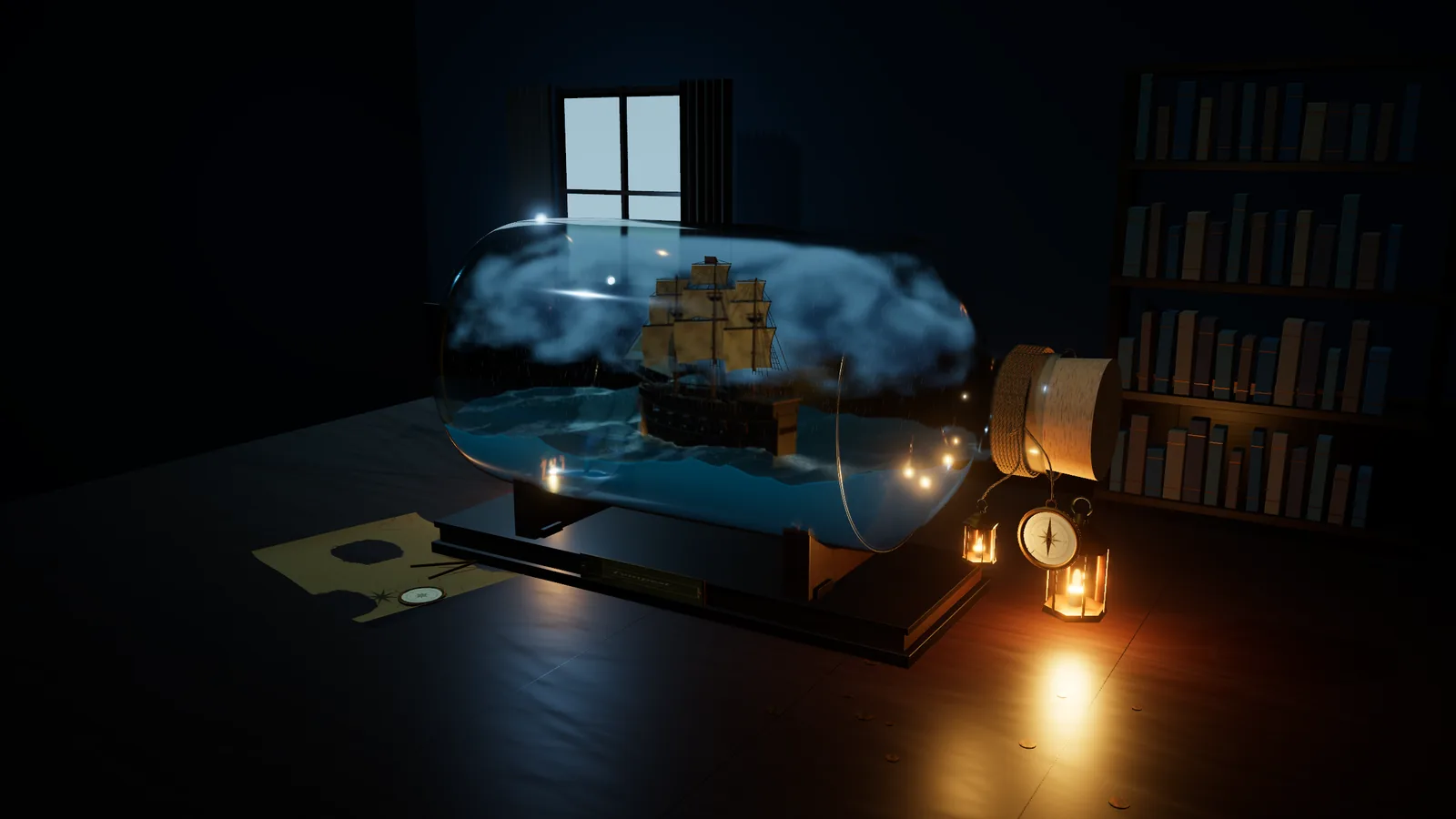
A storm in a bottle, running live in your browser: a three-masted frigate on an FFT-simulated sea, a surfacing blue whale, volumetric clouds and wave-refracted caustics, every piece authored in code. GPT 6.1 Sol built it at Max effort in 11 hours 34 minutes, then benchmarked and optimized its own renderer.
GPT 6.1 Sol · Max effort · not Fast mode
Runs in your browser. Best on a desktop GPU with WebGPU; falls back to WebGL2.
[01] By the numbersBuilt by GPT 6.1 Sol
11 h 34 mBuilt in37 saved checkpoints
111.0 MTokens583.5 k output; cached context re-counted on every request
486Requests167 of them above 272 k tokens of context
$28.88API equivalentHypothetical, at standard API rates. Not an invoice.
42 mCaustics follow-up9.9 M more tokens
[02] The pieceThree.js r186 · WebGPU · WebGL2 fallback · TSL node shaders · TypeScript
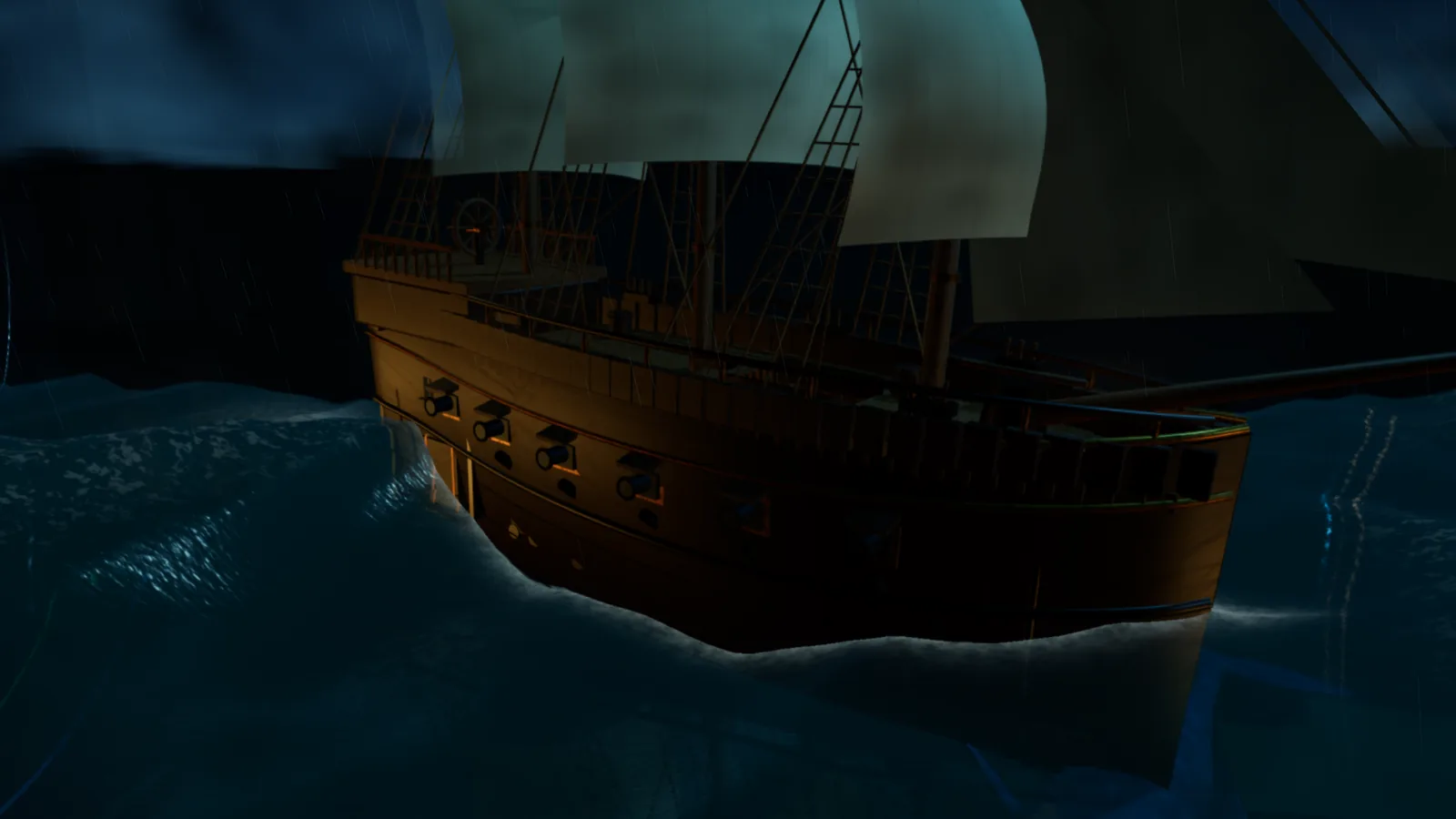
What’s inside
- 01A finite-depth FFT ocean with breaking foam and spray
- 02The Asterion: helm, captain’s cabin, gun deck and cargo hold you can walk through
- 03A blue whale that surfaces and breathes
- 04Volumetric storm clouds, rain and lightning on demand
- 05Wave-refracted caustics on every receiving surface
- 06A 23-stop guided camera tour and synthesized sea sound
What it isn’t
- 01The sea is an FFT wave approximation, not full fluid dynamics or water sloshing inside the glass.
- 02Reflections, ambient occlusion and caustics are real-time approximations, not path tracing.
- 03Cinematic is maximum detail with no universal 60 FPS guarantee; lighter qualities are one click away.
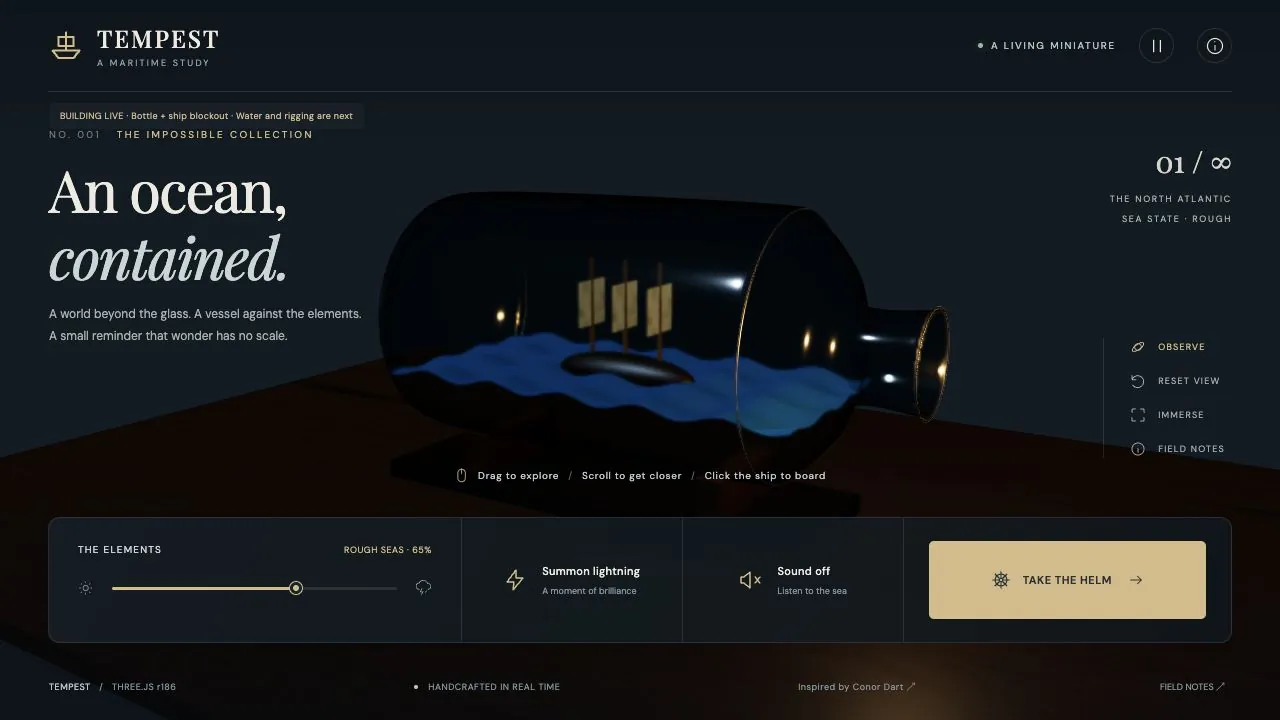
[03] The build log11:34:41 · 37 checkpoints
Watch it being built.
Every checkpoint GPT 6.1 Sol saved while it built Tempest, with the clock and the running token count at the moment it was saved. The captions are its own notes.
[04] Sources and evidenceEverything behind the numbers
No. 001 · Live now
Tempest
Runs in your browser. Best on a desktop GPU with WebGPU; falls back to WebGL2.